Education
Mechanical and automotive engineering.
Author · Engineer · Independent Researcher
I seek not only to describe complex systems, but to make their capacity for self-correction measurable.
BenchEWS is the research program. BenchEWS Studio is the computational reference implementation. MalliSoftware is my non-commercial software-engineering label for open reference tools.

01 / RESEARCH QUESTION
This question connects my work on metrology, systems science, cybernetics, resilience, and reproducible scientific infrastructure. BenchEWS develops this into an open, testable measurement program: evidence-oriented, cross-domain, and explicitly open to falsification.
02 / ENGINEERING PERSPECTIVE
Mechanical and automotive engineering.
Additional studies in philosophy and education deepened my interest in epistemology, scientific method, and interdisciplinary systems thinking.
Extensive professional experience in technical inspection.
Mathematical systems theory, complex adaptive systems, and recoverability — within the BenchEWS research program, with BenchEWS Studio / ECHO and the BenchEWS Duck Lab.
What began with my father and our shared work building model aircraft continues to guide me today: developing technical models and testing their assumptions against reality.
My path into technical systems began with model aviation, which I took up early on together with my father, Ulrich von Mallinckrodt. Later I calculated, designed, built, and flight-tested model aircraft of my own.
In 1983 I took part with a model of the Lo 100 in the German Championship for semi-scale glider models in Eversberg. Paragliding and powered paragliding came later.
From model aviation through paragliding to systems research, one question runs throughout: How does a dynamical system remain controllable under changing external conditions, and how can one recognize the limits of its controllability in time?
What connects these stages is a personal question, not a causal chain: flying experience does not produce scientific results. What remains is a working principle – build a model, calculate or simulate, test it against reality, and correct it when testing contradicts expectation.
The BenchEWS Duck Lab continues this principle with the robot Mali. The Duck Lab is a research project in preparation; Experiment A is a planned study whose execution has not been authorized. No physical measurement data from the Duck Lab exist yet.
Biographical experiences explain a personal way of working. They are not empirical evidence for the validity of scientific hypotheses.
For BenchEWS and the Duck Lab, the evidence limits documented on the relevant research pages continue to apply. BenchEWS is not a universally validated early-warning system; theoretical derivation, simulation, and experimental evidence are reported separately.
It is not the elegance of a theory that decides its practical validity, but how well it holds up against reality.
Editorial guiding principle


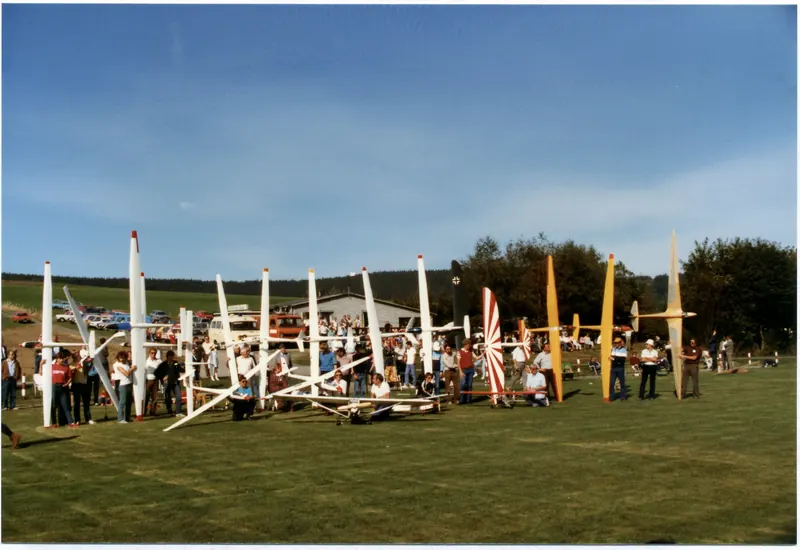
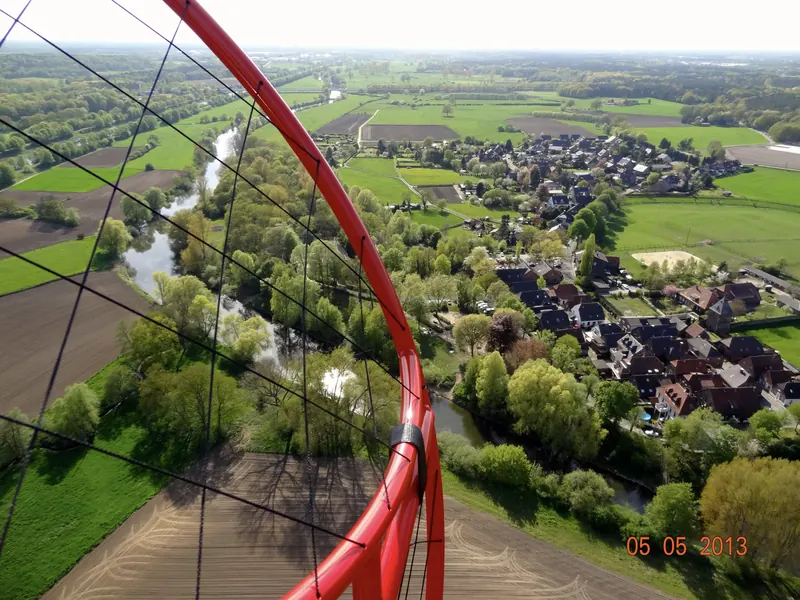
The photographs are unaltered originals; for the website, only screen borders were removed, and the images were resized and compressed.
Videos load only when you start playback; sound is heard only after you start a video and can be adjusted with the player’s volume control. Original sound is available for Lüsen and Otívar; the Montellano recording is silent. The recordings illustrate how a dynamical system is controlled under changing external conditions. They reflect personal flying experience and are not empirical validation of BenchEWS.
03 / SCIENTIFIC SELF-CONCEPTION
BenchEWS is not intended to confirm a worldview. The program visibly separates implemented capabilities, validated results, proposed architectures, and hypotheses.
Artificial intelligence supports language, structuring, software development, and critical reflection. Scientific concepts, interpretations, architectural decisions, and final editorial responsibility remain mine.
I am interested in how social and political systems can learn from experience, mistakes, and warning signals. I try to consider different perspectives, question my own assumptions, and keep human dignity in view. I see my scientific work as a modest contribution to this open inquiry, not as a claim to already have the answers. Criticism should help us better understand processes and structures, rather than pass judgment on people.
04 / RESEARCH CONTRIBUTIONS AND EVIDENCE
BenchEWS connects published mathematical research, openly documented research work and a computational reference implementation. Journal publication does not itself establish independent replication or cross-domain validation. Experimental approaches, architectures not yet implemented and open hypotheses are labelled accordingly.
04 / JOURNAL PUBLICATION
The mathematical result on spectral compression of the stationary covariance matrix, which emerged from the CRTI research, is available as a peer-reviewed journal article in AIP Advances. Discontinuing dedicated CRTI indicator development on November 10, 2026 does not invalidate this distinct result. The DOI points to the authoritative publisher record; claims about independent replication or cross-domain validation remain separate from publication status.
05 / PERSONAL VALUE COMPASS
Freedom, justice, and human dignity remain sustainable only when responsibility, truthfulness, and feedback are not sacrificed to convenience.
Remaining faithful to one’s values under pressure and correcting gaps between aspiration and action rather than concealing them.
Commitment to people and a shared cause, but not obedience. Where silence blocks necessary feedback, integrity must take precedence.
Those who decide must answer for reasons, consequences, and errors. Authorship, scientific assessment, and final decisions remain mine.
Changing one’s position because of better reasons or new evidence is not a loss of reliability, but its most demanding form.
06 / ORIGIN AND ATTITUDE
The von Mallinckrodt family crest appears here as a sign of personal origin and historical continuity. The scientific work of the BenchEWS Research Program rests exclusively on traceable mathematical, empirical, and engineering criteria.

VALUES · RESEARCH · PUBLIC RESPONSIBILITY
I see myself as an independent, socially humanistic systems thinker. I am interested in how people, organisations and societies respond to contradictions and warning signals – and why necessary corrections sometimes fail to occur. Human dignity, empathy, freedom and responsibility guide my personal values. My public political comments express value judgments, not empirical findings from BenchEWS. In research, I distinguish testable findings, open hypotheses and interpretations; uncertainties and methodological limits should remain visible. My own convictions, too, must remain open to correction through better arguments and new evidence.
SCIENTIFIC ATTITUDE
The quality of a system also depends on whether it detects errors, receives justified feedback and enables necessary corrections. I apply the same standard to my own work: hypotheses must be falsifiable, mathematical claims testable and uncertainties visible. Revising a conclusion is not a loss of integrity but a practical expression of it. Scientific independence does not mean independence from criticism; it means independence of thought combined with the greatest possible openness to correction.
07 / RESEARCH IDENTITY
Biographical basis: public ORCID profile and editorially consolidated author-profile versions; journal status referenced through DOI 10.1063/5.0337045.